Patrick Bet-David Faces Questions Over Goliath Ventures Sponsorship at Vault 2025
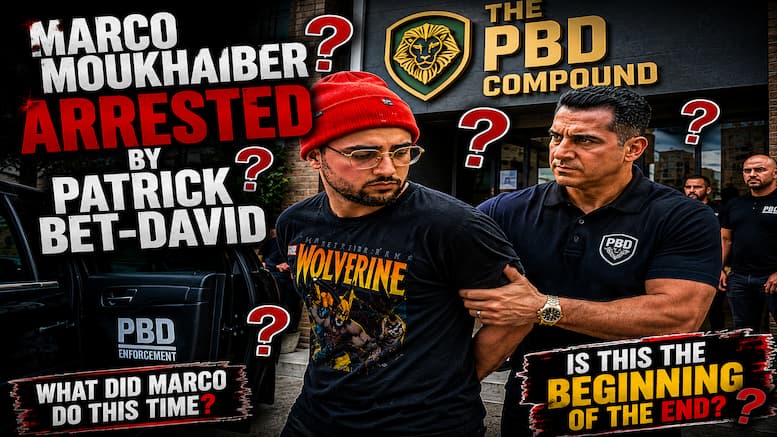
The business and entrepreneurship world has been buzzing following revelations surrounding Patrick Bet-David, his Vault 2025 conference, and the now-controversial sponsorship agreement with Goliath Ventures.
The issue gained significant attention after an interview and discussion involving investigative YouTuber Coffeezilla, who publicly questioned Bet-David about his relationship with Goliath Ventures and whether his platform helped provide credibility to a company now facing serious allegations.
According to reports, Goliath Ventures served as a major sponsor for Vault 2025, with discussions indicating that the sponsorship arrangement involved approximately $1 million paid to Bet-David’s organization. The sponsorship became the focus of public scrutiny after federal authorities brought allegations against Goliath Ventures and its leadership.
The controversy centers around claims that Goliath Ventures operated as a large-scale Ponzi scheme. Federal prosecutors have alleged that the company misled investors and improperly moved substantial amounts of investor funds. The company’s CEO, Christopher Delgado, has been charged with wire fraud and money laundering offenses. It is important to note that these allegations remain subject to ongoing legal proceedings and have not yet been fully resolved in court.
Coffeezilla, known for investigating financial fraud and questionable investment opportunities, challenged Bet-David on several key issues during their conversation. Among the questions raised were whether Bet-David had any responsibility for providing a platform to Goliath Ventures and whether sponsorship funds should be returned if they were ultimately found to have originated from investor losses.
Bet-David responded by explaining that the relationship was viewed as a sponsorship agreement rather than a direct endorsement. He stated that his team conducted due diligence before entering into the arrangement and found no obvious red flags at the time. While acknowledging that the situation was “not a good look,” Bet-David maintained that neither he nor his organization had prior knowledge of any alleged misconduct before authorities became involved.
The discussion quickly spread across social media, podcasts, and business communities. Many observers argued that influential entrepreneurs, conference organizers, and media personalities have a responsibility to thoroughly vet sponsors because audiences often interpret sponsorships as a form of credibility or trust. Others countered that even extensive due diligence may not uncover wrongdoing that regulators and law enforcement agencies themselves have not yet detected.
The situation has reignited a broader debate about accountability within the entrepreneurial and financial education space. As influencers, podcast hosts, and event organizers continue to build large audiences, questions about sponsor selection and transparency have become increasingly important. The Goliath Ventures controversy serves as a reminder that reputational risks can extend far beyond the companies directly involved.
The topic was also discussed by Scott Johnson and Peter Mingils on Building Fortunes Radio. During their conversation, they examined the larger implications of the controversy, including the responsibilities associated with sponsorships, investor trust, and the due diligence expectations placed on public figures and business leaders. Their discussion highlighted the growing importance of transparency in the business media landscape and the potential consequences when sponsors become the subject of regulatory scrutiny.
As the legal proceedings involving Goliath Ventures continue, many within the business community will be watching closely. The outcome may shape future standards for sponsorship vetting, conference partnerships, and influencer accountability. Regardless of where individuals stand on the issue, the conversation has sparked an important dialogue about trust, responsibility, and the role of sponsorships in modern business media.
For listeners interested in hearing discussions from Scott Johnson and Peter Mingils on current business topics and industry developments, visit Building Fortunes Radio at https://buildingfortunesradio.com.
Direct Selling News https://directselling.news and Direct Sales news sites https://directsales.news are covering this topic as well.
You can see more of what Scott Johnson has on https://www.facebook.com/stoptheamwaytoolscam
The Amway tools scam is a hidden profit scheme within the Amway multi-level marketing (MLM) structure that exploits distributors, often leaving them with financial losses instead of the promised wealth. Amway, a well-known MLM company, markets health, beauty, and home products through independent business owners (IBOs). While the company emphasizes product sales, the real money for top-tier distributors, often at the Diamond level or above, comes from selling motivational “tools” like books, tapes, seminars, and rallies, not from product sales. These tools, promoted as essential for success, create a separate revenue stream that disproportionately benefits upline leaders while draining the profits of lower-level distributors.
Distributors are pressured to purchase these overpriced tools, often costing hundreds or thousands annually, with promises of learning the secrets to building a lucrative Amway business. However, studies and lawsuits reveal that 99% of Amway distributors lose money, with average earnings below $100 monthly after expenses. The tools business, controlled by high-ranking distributors like Dexter Yager, generates millions for the elite, who earn significant markups on items like cassette tapes sold at rallies for up to $10,000 a night in cash. Meanwhile, new recruits face high startup costs—starter kits, training sessions, and product samples, further eroding their profits. This creates a pyramid-like structure where uplines profit from downlines’ purchases, not retail sales, resembling an illegal scheme.